
Have you ever been troubled by sudden urine leakage from a urine bag? I understand this feeling deeply, both as a former caregiver and now as a member of the Greatcare team. Urine bag leakage is far more than an annoying inconvenience—it can compromise a patient's dignity, skin health, and even lead to infections. Understanding why it occurs is the first step toward preventing problems and ensuring consistent, safe care. At Greatcare, we engineer drainage systems with precision and durable materials to minimize these risks, providing reliable protection for your loved ones.
What are the key causes of urine bag leakage?
The reasons for leakage aren't always obvious, but they typically fall into these key categories:
Connection failure: The most common cause, where leakage occurs at the junction between the catheter and the bag.
Poor sealing or improper connection: Screw caps or clips may not be fully tightened or secured.
Mismatched or aged connectors: Using incompatible products from different brands, or connectors that have cracked due to repeated use or aging.
Issues with the Urine Bag Itself: Leaks originating from the bag body or its valves.
Damaged Valves: The bottom drainage valve may not close completely, or its seal may fail due to wear or contamination by urine salt crystals.
Punctures or Material Degradation: The bag may be accidentally punctured, or the material may become brittle and develop micro-cracks over time (especially when exposed to sunlight or after repeated use).
Improper Use and External Factors:
Overfilling: Exceeding capacity increases internal pressure, causing leakage at weak points like connectors or valves.
Improper Placement: Hanging too low strains connections; positioning above bladder level risks reflux.
A universal principle: Never ignore leakage or attempt to “make do.” Immediate action is critical for hygiene and safety. No urine bag should exceed the manufacturer's recommended replacement cycle.
How does the Greatcare drainage system minimize leakage risk?
At Greatcare, we are committed to creating urinary drainage systems with secure connections and durable materials, ensuring reliable, leak-proof performance throughout their recommended lifespan.
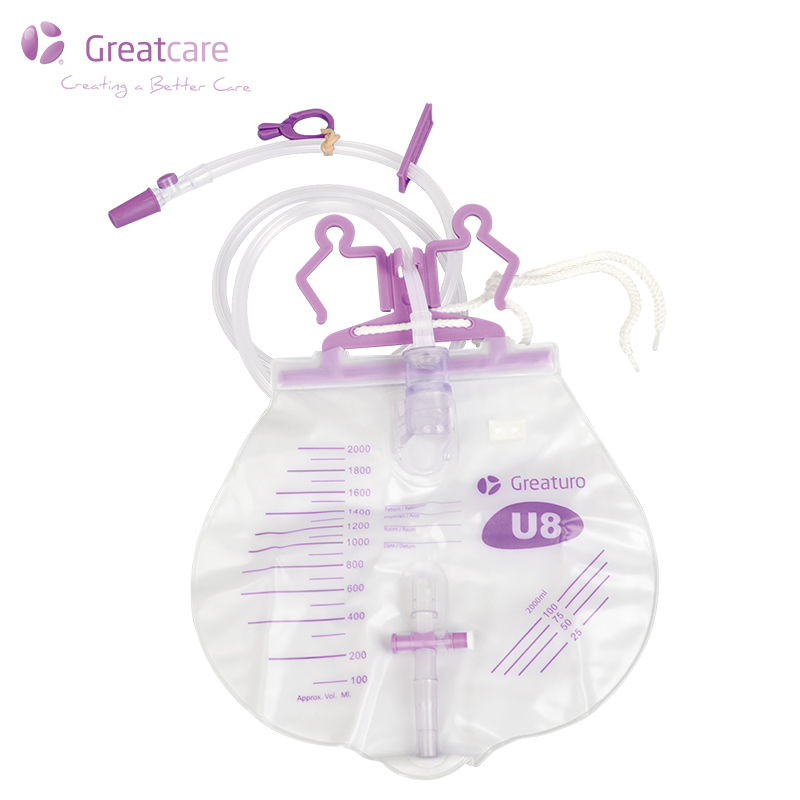
Leak-Proof Valve: The bottom drainage valve incorporates a dual-seal mechanism for smooth, effortless emptying while ensuring a tight seal each time, effectively resisting crystallization and wear.
High-Strength, Pressure-Resistant Tubing: The drainage tube is crafted from flexible yet robust polymer, resistant to crushing and kinking, preventing leaks elsewhere in the system caused by tubing compression.
Highly Transparent, Durable Bag Material: Our urine bags are crafted from medical-grade, latex-free PVC, maintaining strength and transparency for easy monitoring of urine volume and sediment while resisting tears.
How to Establish a Practical Daily Leak Prevention Routine?
Implementing a simple daily inspection routine is the best defense. First, follow your healthcare provider's guidance on urine bag replacement—typically every 3-5 days for standard bags.
Morning Inspection: During routine care, visually inspect the urine bag for cracks or wear. Feel the entire length of the tubing to check for kinks.
Connection Verification: Gently check that connections are secure without twisting or pulling.
Safe Emptying Habits: Empty the bag promptly before it reaches 3/4 capacity. After emptying, ensure the valve is securely closed until you hear or feel it click into place.
Safe Suspension: Use the provided straps or fixation sleeves to ensure the urine bag (whether leg bag or overnight bag) is positioned correctly without pulling on the tubing.
Remember:
Replace the urine bag immediately if it shows any signs of cloudiness, hardening, cracking, or persistent leakage—regardless of how long it has been in use. The consistent reliability of the Greatcare system supports this process by addressing common failure points at the design stage.
Why is preventing leakage a critical pillar of care?
Consider the urinary drainage system as the first line of defense against infection and the guardian of skin integrity. Leakage compromises this barrier, exposing skin to moisture that can lead to painful skin breakdown and severe infections. Simultaneously, it creates a pathway for bacteria to ascend the catheter into the bladder. Furthermore, the stress and embarrassment of frequent leakage significantly impact a patient's mental well-being and willingness to remain active.
Treat proactive system checks and timely replacements as essential components of leak prevention—a hallmark of high-quality care. This simple habit prevents complex complications. Investing in a thoughtfully designed drainage system is an investment in sustained safety, dignity, and peace of mind.
We hope this guide helps you understand and prevent the causes of urine bag leakage. If you have questions about specific care procedures or are seeking a more reliable drainage system to simplify daily care, we are here to assist you. Contact us today to learn how Greatcare solutions can support your care journey. Our team is happy to provide further information and help you find products tailored to your needs.


