
Can a Urine Bag be worn long-term?
The answer is: Yes, but this is a "medical-integrated lifestyle" approach requiring professional management and meticulous care. Long-term indwelling catheterization with a Urine Bag (medically termed "long-term indwelling catheterization") is a necessary choice for many patients with neurogenic bladder, severe obstruction, or postoperative recovery. The key is that this is not simply a matter of "inserting and forgetting," but a systematic health management program.
The core of long-term use lies in dynamic balance and proactive prevention:
Regular replacement is the ironclad rule: The catheter itself must be changed regularly according to medical guidelines to prevent urinary salt crystal adhesion and infection. The Urine Bag (drainage bag) is changed even more frequently (usually weekly or according to product instructions).
Preventing complications is the goal: The long-term goal is not "getting used to it," but rather preventing complications such as urinary tract infections, stones, and bladder atrophy through meticulous care. This requires the patient or caregiver to become a "semi-expert."
High-quality life is possible: By using concealed leg bags and learning the correct fixation method, patients can fully engage in daily work, social activities, and even moderate exercise. Mental adaptation and life reconstruction are crucial.
A principle that must be remembered is: "Long-term" does not mean "laissez-faire." Any redness, swelling, severe pain, abnormal discharge, cloudy urine, or fever are warning signs from the body and require immediate medical attention.
How is the urine bag connected to the body?
The connection is not a simple "insertion," but a closed, sterile medical system. At its core is a precision medical device called an "indwelling catheter."
Detailed explanation of the connection steps and principles:
Internal component: A thin, flexible medical silicone or rubber catheter is inserted into the bladder through the urethra by medical personnel under sterile conditions.
Key fixation design: The tip of the catheter has a balloon filled with sterile water, which "anchors" it within the bladder, preventing slippage. This is the cornerstone of the safe internal connection.
External Connection Point:
The end of the catheter outside the body is a standardized universal interface.
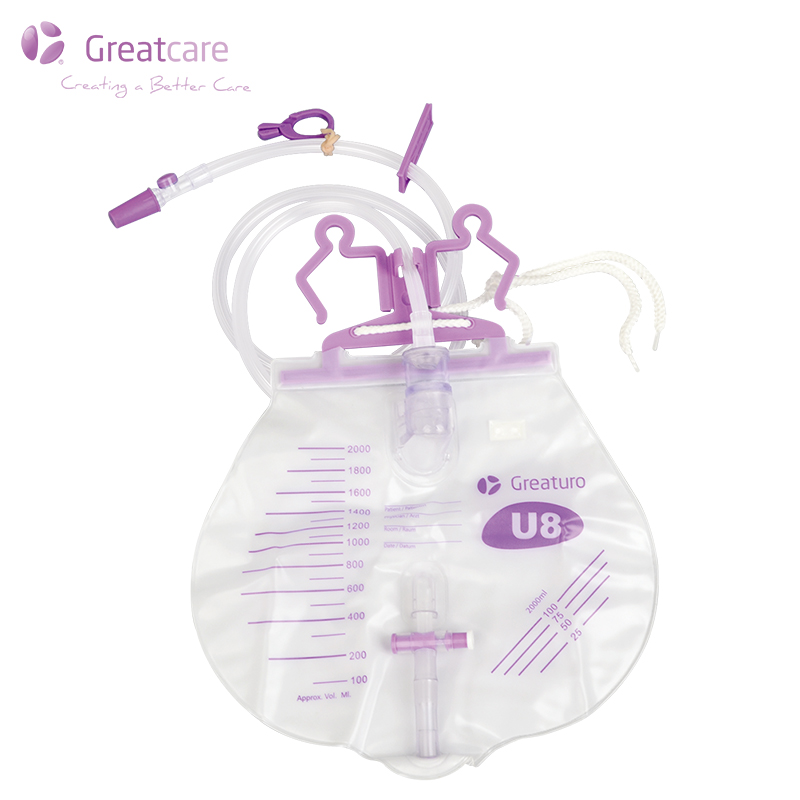
Urine Bag Connection: The drainage tube at the top of the urine bag is equipped with a connector that perfectly matches it. It connects tightly to the external end of the catheter through a direct insertion method, forming a complete and sealed drainage path from the bladder to the urine bag.
System Integrity:
This system is completely closed, except when urine is being discharged. This greatly reduces the risk of external bacteria entering.
How to Achieve Long-Term, Safe, and Dignified Care?
Establishing a scientific daily management process is key to success:
Professional Start, Regular Follow-up: All initial procedures must be guided by healthcare professionals. Even with extended home care, regular hospital visits are necessary for bladder function assessments and urine tests.
Strictly adhere to the replacement schedule: Establish clear replacement calendars for both the catheter and the urine bag, and strictly follow them. Never wait until a problem arises to replace it.
Master daily care:
Cleanliness: Clean the urethral opening and proximal catheter tip daily with water, keeping them dry.
Security: Use a dedicated catheter securing tape to properly secure the catheter to the thigh or abdomen to prevent traction that could cause the balloon to irritate the bladder wall.
Drainage: Keep the urine bag below the bladder level and empty it regularly (no more than 3/4 full).
Active lifestyle and mental well-being: Choose appropriate clothing and assistive devices (such as leg straps) and participate in social activities. Accept that this is a health condition that needs management, not a label that defines your entire life.
Why are professional products and awareness a double guarantee of long-term safety?
Consider long-term indwelling catheterization as a medical management procedure that requires the support of professional tools. A reliable product system, like a silent professional nurse, provides stable physical protection for patients through:
safe materials to reduce tissue irritation,
reliable structure to prevent accidental disconnection, and
human-centered design to minimize operational errors.
The right understanding empowers patients to proactively manage, identify risks, and maintain their health. Only by combining these two can the necessity of "having to wear a catheter" be transformed into "living safely and with dignity."
We understand that deciding to wear a urine bag long-term is a significant life adjustment. Greatcare aims to be your trusted partner on this journey, providing not only safe and reliable products but also humanely designed products and professional support. If you have further questions or are looking for a more suitable drainage solution for long-term use, please feel free to contact us. Our team is dedicated to providing you with the most suitable personalized support through professional knowledge and meticulous care.


